
A GLP-1 medication such as Ozempic, Wegovy or Mounjaro can make eating less feel dramatically easier. Hunger may quiet down. Cravings may become less intrusive. The scale may begin moving after years of frustration.
That can be a meaningful opportunity, but it can also create a blind spot. When your appetite falls sharply, it becomes easier to eat too little, miss key nutrients and lose muscle and strength along with fat. You start to assume that every lower number on the scale is automatically a win.
The goal is not simply to become lighter. The goal is to come through the process healthy, strong, capable and prepared to maintain the result.
Key takeaways
- GLP-1 medications reduce appetite, which makes it easier to under-eat protein and lose muscle, not just fat.
- Strength training two to three times a week and protein at every meal are the two biggest levers for protecting muscle on a GLP-1.
- Track strength, energy and recovery alongside the scale. Weight loss that leaves you weaker deserves a second look.
- Coaching handles daily habits and training; your prescriber handles the medication. You need both.
What GLP-1 medications like Ozempic and Wegovy change
GLP-1–based medications, including semaglutide (Ozempic, Wegovy) and tirzepatide (Mounjaro), influence appetite, digestion and the body’s response after a meal. Many people feel full sooner, think about food less often, and naturally reduce how much they eat. That lower “food noise” can create valuable space to make deliberate changes.
But medication does not automatically teach someone how to build balanced meals, train effectively, recover, manage stress, or navigate the return of appetite if treatment changes. It changes the coaching context; it does not remove the need for good coaching.
The hidden risk: muscle loss on a GLP-1
Weight loss is not made up of body fat alone. When total intake drops, especially if weight is coming off quickly, the body can also lose lean mass. Research on GLP-1 medications has found that a meaningful share of the weight lost can come from lean tissue. That matters because muscle supports strength, movement, metabolic health, independence and performance in daily life.
A person can be pleased with the scale while also feeling weaker, more fatigued, dizzy, unusually cold, poorly recovered, or less able to train. Hair shedding, disrupted menstrual cycles, persistent gastrointestinal symptoms, and an extreme loss of interest in food can also signal that the plan needs closer attention.
These signs are not a diagnosis. They are reasons to pause, gather information and involve the prescribing medical team when appropriate.
Five ways to protect muscle and strength on a GLP-1
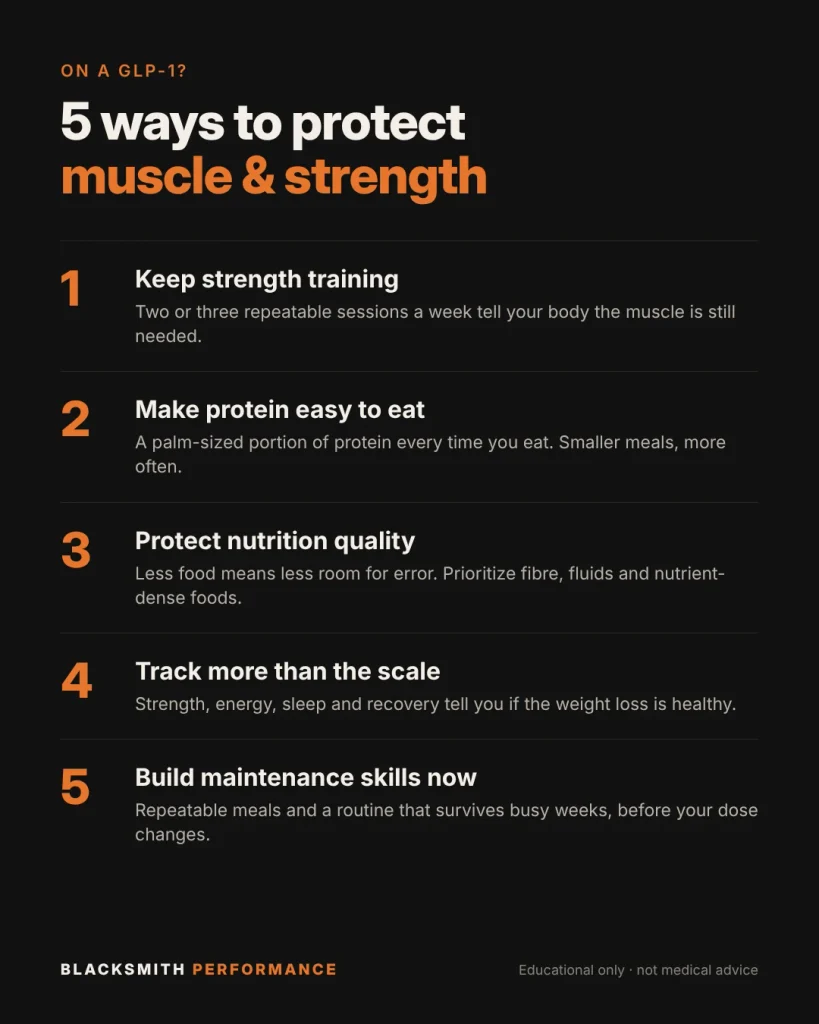
1. Keep strength training in the plan
Cardio is valuable, but resistance training sends a specific message: this muscle is still needed. A well-designed strength training program helps preserve function while body weight changes.
The right program depends on training history, health status and recovery. The important point is consistency. Two or three purposeful strength sessions that can be repeated are often more useful than an ambitious plan that disappears when energy is low.
2. Make protein easier to eat on a GLP-1
Protein becomes harder to prioritize when appetite is suppressed, which is exactly why it deserves more attention. Instead of forcing large meals, build smaller protein-forward meals and snacks around foods that are comfortable and appealing. A simple starting point: include a palm-sized portion of protein every time you eat.
- Choose a clear protein source first, then add produce, carbohydrates and fats as tolerated.
- Use smaller portions more often if large meals feel uncomfortable.
- Keep convenient options available: Greek yogurt, cottage cheese, eggs, fish, poultry, tofu, lentils, or a simple protein shake.
- Treat supplements as practical tools. They’re not magic, and not a complete replacement for food.
A coach can help translate a general protein goal into meals that fit real appetite, schedule, culture and preferences. Individual targets should reflect the person and, when needed, guidance from their registered dietitian or medical team.
3. Protect nutrition quality when there is less room for error
When someone is eating much less, every meal carries more nutritional weight. A diet built mostly around whatever is easiest may leave gaps in fibre, fluids, vitamins and minerals.
Aim for nutrient-dense foods that are easy to tolerate. Hydration matters, particularly when fullness, nausea or constipation make eating and drinking feel like work. Changes should be gradual and responsive to symptoms rather than driven by perfection.
4. Watch performance, energy and symptoms, not only weight
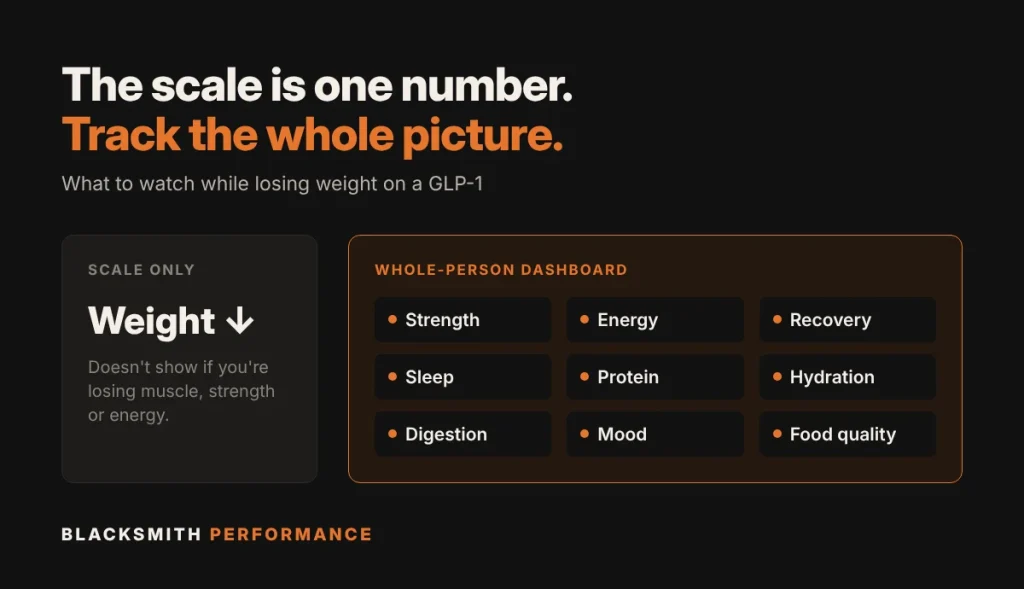
The scale is one data point. A stronger coaching dashboard includes training performance, strength, energy, recovery, sleep, food quality, protein consistency, hydration, digestion, mood and the ability to follow the plan.
If weight is falling while strength, energy and daily function are collapsing, the plan deserves a second look. Good coaching interprets the whole person, not a single metric.
5. Build maintenance skills before you stop a GLP-1
The best time to prepare for maintenance is not the day medication changes or stops. Appetite and weight-management conditions can shift again, so the habits built during treatment matter.
- A small set of repeatable meals
- A strength routine that survives busy weeks
- A plan for travel, social events and high-stress periods
- Regular self-monitoring without obsession
- A support system and a clear medical follow-up plan
Medication may create an opportunity for change. Skills, systems and support help make that change durable.
How online coaching supports people on GLP-1 medication
Most people on a GLP-1 don’t need more information. They need someone to help them apply it week by week as appetite, energy and weight change. That is where online fitness coaching fits well, especially for busy professionals who can’t commit to fixed gym appointments.
- A strength program you can follow at home, at the gym or while travelling, adjusted as your energy changes
- Regular check-ins on protein, hydration, training performance and how you’re feeling
- Fast adjustments when appetite drops, symptoms flare or the schedule gets busy
- A maintenance plan built in advance, so results hold if your dose changes or treatment ends
If you’re in Toronto, coaching can be combined with in-person sessions. If you’re anywhere else in Canada, it works fully online. Our guide to online fitness coaching for busy professionals explains how the process works.
What this means for employers and corporate wellness
GLP-1 use is growing quickly among working adults, and many employers are now seeing it show up in benefits conversations. Medication alone doesn’t protect an employee’s strength, energy or long-term health. A corporate wellness program that includes strength training, nutrition coaching and accountability helps employees get more from treatment and keep their results, whether they work in the office, hybrid or fully remote.
Coaching and medical care have different jobs
A qualified coach can help with daily behaviours: meal structure, strength training, planning, accountability, problem-solving and communication with the medical team. A coach should not recommend a medication, change a dose, advise someone to stop treatment, or diagnose a medical problem.
Persistent vomiting, severe or worsening abdominal pain, inability to stay hydrated, fainting, repeated dizziness, extreme weakness, or other concerning symptoms require prompt medical attention. Medication questions belong with the prescriber or pharmacist.
GLP-1 and strength training: frequently asked questions
Do you lose muscle on a GLP-1 like Ozempic or Wegovy?
You can. When you eat much less, part of the weight you lose can be muscle, not just fat. Regular strength training and enough protein are the most practical ways to reduce that loss.
Should I lift weights while taking a GLP-1?
For most people, yes. Two or three strength sessions a week help preserve muscle and function. Start at a level that matches your energy and recovery, and check with your medical team if you have health conditions or symptoms.
How much protein do I need on a GLP-1?
It depends on your body size, activity and health. A practical starting point is a palm-sized portion of protein at each meal and snack. A registered dietitian or your medical team can set a specific target.
What happens when you stop taking a GLP-1?
Appetite often returns, and weight regain is common without a plan. Building strength, repeatable meals and support systems while you are still on the medication makes the transition easier.
Can online coaching help if I’m on a GLP-1?
Yes. Online coaching can handle your training, protein and habit-building with regular check-ins, while your prescriber manages the medication. The two work best together.
Where can I get GLP-1 coaching in Toronto?
Blacksmith Performance offers strength and nutrition coaching for people using GLP-1 medications, with in-person personal training in downtown Toronto and online coaching anywhere in Canada. Coaching works alongside your doctor, not in place of them.
A better definition of success
GLP-1 medications are neither a shortcut that makes effort irrelevant nor a failure of willpower. They are powerful tools. Like any powerful tool, the result depends partly on what is built around it.
Successful weight loss should leave a person with more than a smaller body. It should protect their ability to train, work, parent, travel and live with confidence. That means paying attention to strength, nutrition, energy, symptoms and the skills that will still matter years from now.
At Blacksmith Performance, we care about what you are becoming while the weight comes off and not only what the scale says.
Get coaching that works alongside your GLP-1
Blacksmith Performance helps busy professionals in Toronto and across Canada build strength, nutrition and health systems around demanding real lives. If you’re using a GLP-1 and want online coaching that works alongside your medical care, book a free strategy call or contact us.
Health note: This article is educational and is not medical advice. GLP-1 medications should be prescribed and monitored by an appropriate healthcare professional.