
You have a 6 p.m. session after a long day at the office, and lunch was at noon. Do you eat something now, or train on empty? What you eat before a workout, and when, can be the difference between a strong session and one where you feel flat, heavy or dizzy.
Quick answer: eat a balanced meal with carbohydrates and protein 2 to 3 hours before you train, or a small, easy-to-digest snack (mostly carbohydrates) 30 to 60 minutes before. Keep fat and fibre low close to your workout, and start hydrated.
This guide breaks it down by timing, with a simple table, 10 pre-workout meal ideas you can make at home or grab downtown, and tips for morning, lunch-hour and evening training.
Key takeaways
- The closer you are to your workout, the smaller and simpler your pre-workout meal should be.
- Carbohydrates fuel hard training; protein supports muscle repair; fat and fibre slow digestion, so keep them lower right before you train.
- For workouts under an hour, a 200–300 calorie carb-based snack 30–60 minutes before is usually enough.
- Drink water in the hours before training, and keep caffeine within Health Canada’s 400 mg a day limit.
- The best pre-workout meal is one you tolerate well. Test new foods on training days, not on race or test days.
Why your pre-exercise meal matters
A good pre-exercise meal tops up your energy so you can train harder and recover better. Carbohydrates are your muscles’ main fuel for intense work like strength training, intervals and sports. Protein before training gives your body amino acids to start the repair process, and the International Society of Sports Nutrition notes that the size and timing of a pre-exercise meal can affect how much protein you need afterward (Kerksick et al., JISSN, 2017).
Eating too much, too close to training, can cause cramps, nausea or a heavy feeling. Eating nothing for many hours can leave you tired, light-headed and unable to push. The goal is the middle ground.
What to eat before a workout: a timing guide
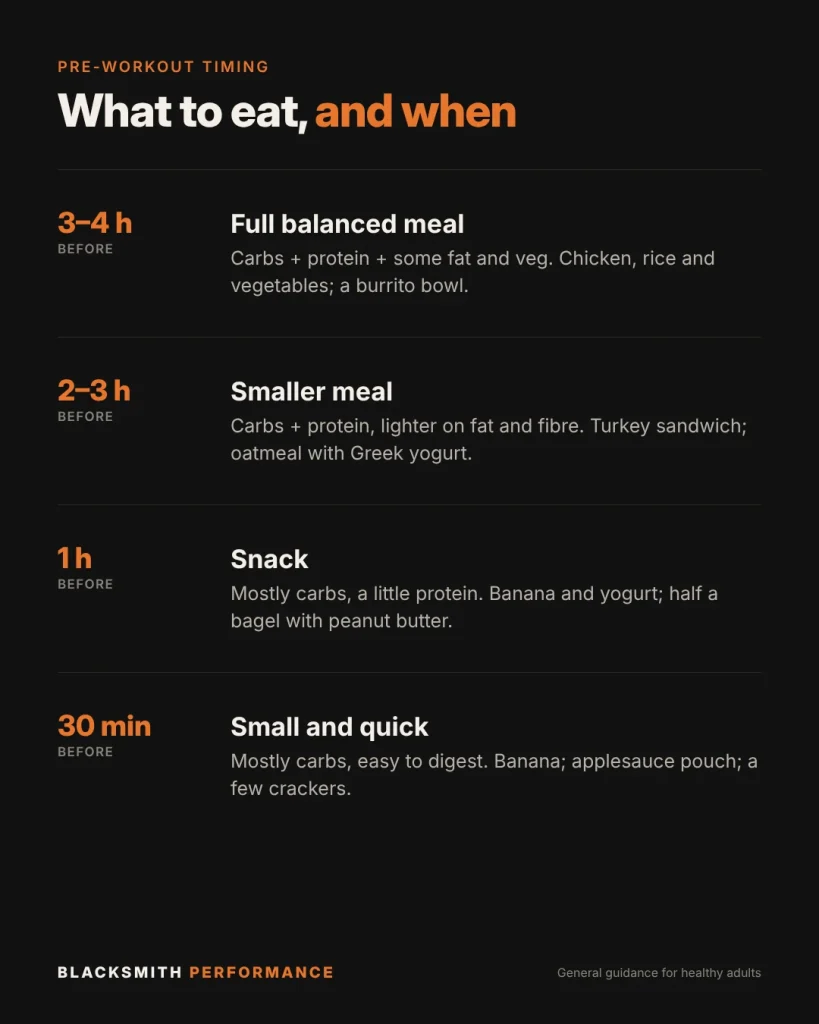
The timing below follows guidance based on the joint position statement of Dietitians of Canada, the Academy of Nutrition and Dietetics and the American College of Sports Medicine (2016; summarized by the Human Performance Resource Center).
| When you eat | What to eat | Examples |
| 3–4 hours before | A full, balanced meal: carbs + protein + some fat and vegetables | Chicken, rice and vegetables; salmon with potatoes; a burrito bowl |
| 2–3 hours before | A smaller meal: carbs + protein, lighter on fat and fibre | Turkey sandwich; oatmeal with Greek yogurt; eggs on toast |
| 1 hour before | A snack: mostly carbs, a little protein | Banana and yogurt; a bagel with a little peanut butter; a small smoothie |
| 30 minutes before | Something small and quick to digest, mostly carbs | Banana; applesauce pouch; a few crackers; a small glass of juice |
For longer or harder sessions (over an hour), active people are generally advised to eat about 1–4 g of carbohydrate per kilogram of body weight 1–4 hours before. For a 70 kg (154 lb) person, that is roughly 70–280 g, depending on timing and how demanding the session is. For a typical one-hour gym workout, most people need far less: a carb-based snack of about 200–300 calories 30–60 minutes beforehand is usually plenty (HPRC).
What makes a good pre-workout meal
- Carbohydrates: your main fuel. Oats, rice, potatoes, bread, bagels, pasta, fruit.
- Protein: a moderate serving. Eggs, Greek yogurt, chicken, fish, tofu, cottage cheese, milk or a protein shake.
- Lower fat and fibre close to training: both slow digestion. Save big salads, beans, fried food and rich sauces for after.
- Fluids: water in the hours before you start, so you begin hydrated.
10 good pre-workout meals and snacks
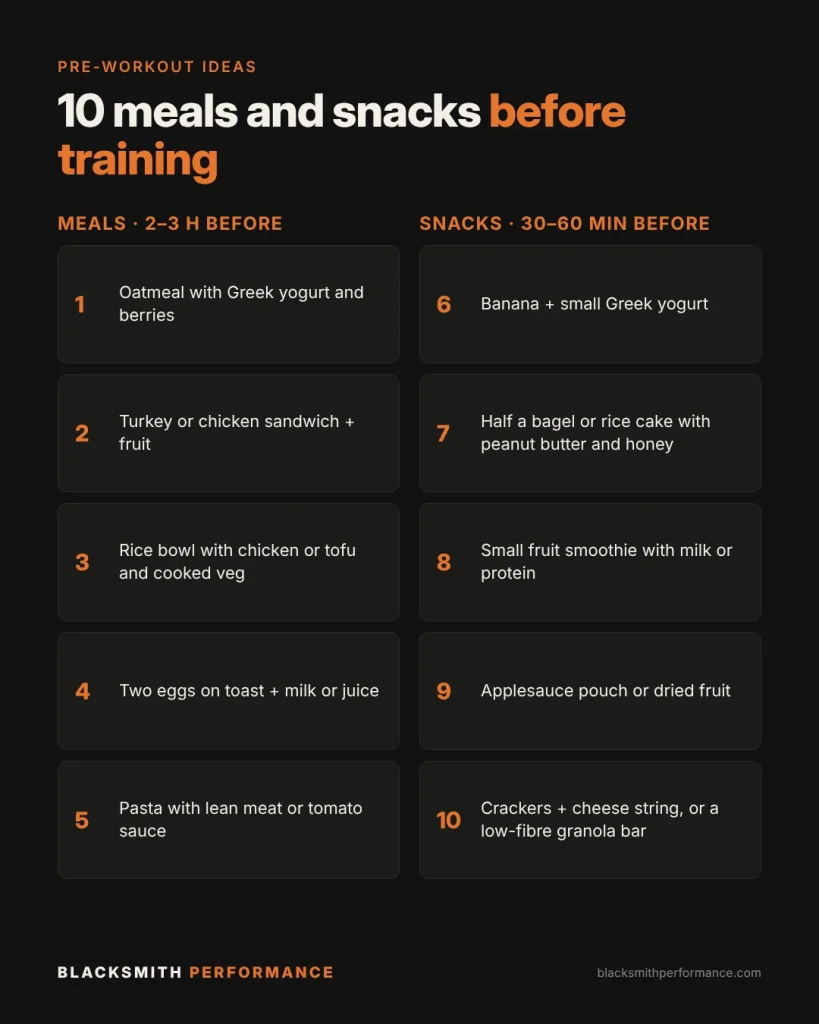
Meals (2–3 hours before)
- Oatmeal with Greek yogurt and berries. Steady carbs with protein, easy on the stomach.
- Turkey or chicken sandwich on whole-grain bread, with a piece of fruit.
- Rice bowl with chicken or tofu and cooked vegetables. Go light on the sauce.
- Two eggs on toast with a glass of milk or juice.
- Pasta with a lean meat or tomato sauce, in a moderate portion.
Snacks (30–60 minutes before)
- Banana with a small cup of Greek yogurt.
- Half a bagel or a rice cake with a thin layer of peanut butter and honey.
- Small fruit smoothie made with milk or a scoop of protein.
- Applesauce pouch or a handful of dried fruit when you only have 15–30 minutes.
- Crackers with a cheese string, or a small granola bar that is low in fat and fibre.
Pre-workout eating by time of day
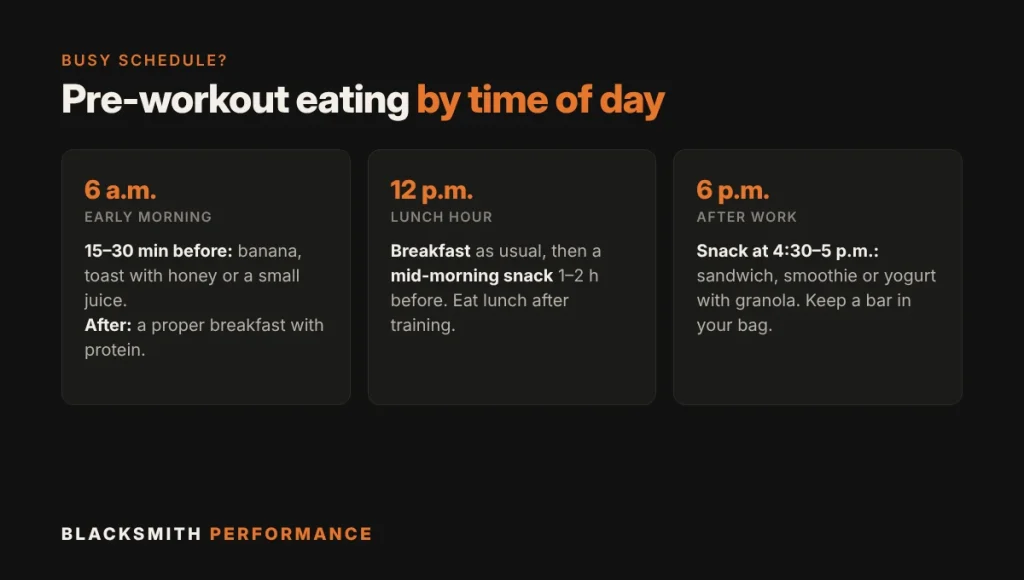
Early-morning workouts
If you train at 6 a.m., there’s no time for a full meal. Try a banana, a slice of toast with honey or a small glass of juice 15–30 minutes before, then eat a proper breakfast with protein after. Some people feel fine training fasted for an easy session. If you feel weak or dizzy, eat something small first.
Lunch-hour workouts
Have a balanced breakfast, then a small carb-based snack mid-morning, about 1–2 hours before you train. Eat lunch after your session. If you work downtown, a banana and a yogurt or half a bagel from a café or PATH food court is an easy grab-and-go option.
After-work and evening workouts
This is where most people under-fuel. If lunch was at noon and you train at 6 p.m., plan a snack around 4:30 or 5 p.m.: a sandwich, a smoothie or yogurt with granola. Keep a non-perishable option, like a granola bar or dried fruit, in your desk or gym bag.
Hydration and caffeine before training
Drink about 500 mL (16 oz) of water 2–4 hours before exercise, then sip as needed so you start your session hydrated (HPRC). If you sweat heavily or train in a hot room, you may need more.
Many people like coffee before training. If you use caffeine, keep your total under Health Canada’s guidance for healthy adults: no more than 400 mg a day, or about three 8 oz cups of brewed coffee (Health Canada). Pre-workout supplements can contain a lot of caffeine, so check the label and avoid caffeine late in the day if it affects your sleep.
Common pre-workout mistakes
- Eating a large, heavy meal right before training. Leave 2–3 hours after a big meal.
- Training on empty after a long day. Plan an afternoon snack for evening sessions.
- Too much fat or fibre just before training, such as a big salad, beans or fried food.
- Trying a new supplement or food on an important training day. Test it first.
- Forgetting fluids, especially in summer or during winter when indoor air is dry.
When to get personalized advice
These are general guidelines for healthy adults. Talk to your doctor or a registered dietitian before changing how you eat around exercise if you have diabetes, take medication that affects blood sugar, are pregnant, have a digestive condition or have a history of disordered eating. If you are taking a GLP-1 medication and have a small appetite, see our guide to Ozempic muscle loss and how to keep your muscle.
How Blacksmith Performance helps with nutrition
Our head coach, Will Haywood, is a Precision Nutrition Level 2 coach. As part of our personal training and online fitness coaching, we help busy professionals build simple eating habits around their training schedule: what to eat before early sessions, how to fuel after-work workouts, and how to plan meals around a packed week. No rigid meal plans, just practical habits that fit real life.
Pre-workout nutrition: frequently asked questions
What should I eat before a workout?
Eat a balanced meal with carbohydrates and protein 2–3 hours before, or a small, mostly carbohydrate snack 30–60 minutes before. Good options include oatmeal with yogurt, a sandwich, or a banana with yogurt.
How long should I wait to work out after eating?
About 2–3 hours after a full meal and 30–60 minutes after a small snack. Everyone’s digestion is different, so adjust based on how you feel.
Is it OK to work out on an empty stomach?
For short, easy sessions, many healthy people feel fine training fasted. For harder or longer workouts, eating beforehand usually helps performance. If you feel weak, shaky or dizzy, eat something small before training.
What is a good pre-workout snack 30 minutes before training?
Something small and quick to digest, mostly carbohydrates: a banana, an applesauce pouch, a few crackers, or a small glass of juice.
Should I eat protein before a workout?
A moderate amount of protein in your pre-workout meal is helpful, especially if your last meal was hours ago. Yogurt, eggs, milk, chicken or a protein shake all work.
Is coffee a good pre-workout drink?
For many people, yes. Caffeine can help you feel more alert. Keep your total caffeine under 400 mg a day, and avoid it late in the day if it affects your sleep.
What should I avoid eating before a workout?
Large or greasy meals, high-fibre foods like beans and big salads, and anything new or unfamiliar close to training, since these can cause stomach discomfort.
Want a nutrition plan that fits your training?
If you would like help working out what to eat around your workouts, schedule and goals, contact us to book a free consultation. We will look at your routine and build simple habits you can stick to.
Note: This article is general information for healthy adults, not medical or dietetic advice. Talk to your doctor or a registered dietitian about your individual needs.